
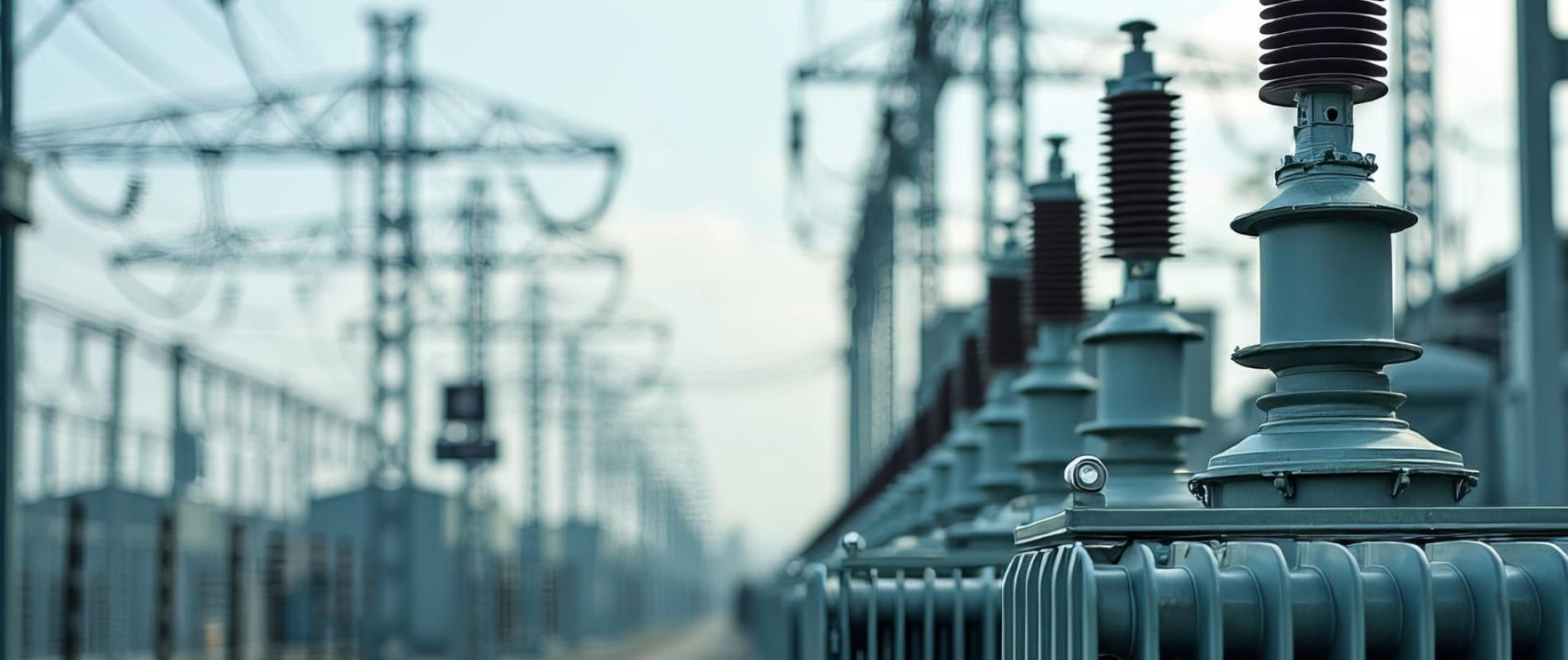
When maintenance crews do their regular station walk-arounds, one of their best tools is a hand-held thermal camera. You point it at the transformer, and the screen shows a bright picture of temperatures in red, yellow, and blue.
If you see a bright red or white glowing spot on a porcelain bushing, you know something is wrong. But where that hot spot shows up tells a very different story about what is happening inside.
If the infrared picture shows a bright red spot right at the very top metal stud where the wire connects, the problem is usually outside.
As we talked about in earlier posts, high electrical current traveling through a loose connection creates high resistance. High resistance acts just like an electric toaster coil, generating intense heat right on that top clamp.
If you catch this top hot spot early, the fix is quick and simple. You schedule a short shutdown, clean the oxidation off the metal pad, and tighten the bolts down with fresh spring washers.
A far more dangerous sight on the thermal screen is a hot spot sitting right in the middle of the smooth porcelain body.
A healthy porcelain body should look cool and uniform on the camera screen. If the middle section is glowing hot, it means electricity is leaking through the internal insulation inside the bushing pipe.
This heat usually happens because moisture or aged oil has created a tiny carbon track inside the unit. Electricity is slowly chewing its way through the internal paper and oil layers.
When you see a hot spot on the ceramic body itself, you cannot just tighten a bolt. That bushing is critically damaged and can explode without warning. You need to take the transformer offline immediately and swap the unit out.
Sometimes the thermal camera shows that the top and middle are normal, but the bottom metal flange right where it connects to the tank is running unusually hot.
This usually points to a cooling problem inside the transformer tank. Either the oil level inside the bushing pipe has dropped too low, or the oil circulating around the bottom foot is trapped by sludge or a blocked valve.
Without proper oil flow around the bottom half, the intense heat generated by the transformer's internal coils stays trapped right at the mounting flange.
When you are scanning bushings with a thermal camera, the easiest trick is to compare the three phases—A, B, and C—side by side.
Because all three phases usually carry a similar amount of power, their thermal pictures should look almost identical under normal conditions.
If Phase A and Phase B show a dull yellow glow at 45 degrees Celsius, but Phase C is glowing bright white at 85 degrees Celsius, you don't need to guess. Phase C has a serious fault that needs immediate attention before it trips the main breaker.



WeChat Official Account
+86-757-81230551
+86-18925992735
