
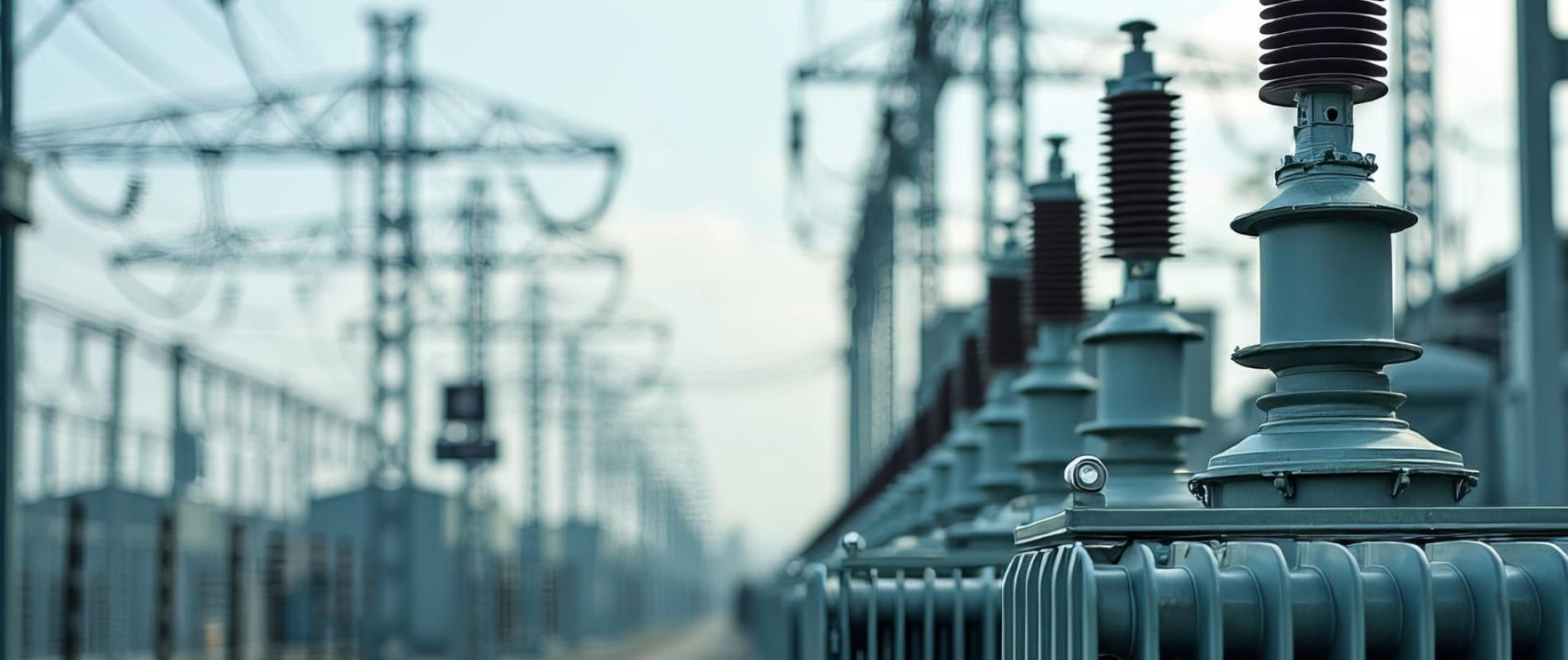
When maintenance crews do a walk-around inspection, the most common problem they find around a porcelain bushing is not a cracked body or a broken shed. It is a slow, messy oil seep around the bottom flange.
If you look right where the heavy porcelain meets the steel transformer cover, you will see a thin black ring squeezed between the two metal faces. That little ring is the rubber gasket.
The main box of the transformer is full of oil, and the porcelain bushing sits on top to guide the wire inside. Because you are bolting a hard, rigid porcelain base down onto a flat steel roof, those two surfaces will never match up perfectly.
If you put porcelain straight against steel, there would be tiny microscopic gaps everywhere. The transformer oil would splash right out through those gaps the second the internal pump turns on.
The rubber gasket sits in the middle like a flexible cushion. When you torque down the base bolts, the soft rubber squashes into every tiny groove and scratch on both the steel roof and the porcelain foot, creating a liquid-tight seal.
Field workers often wonder why a gasket that was soft and flexible when installed turns brittle, hard, and crumbly after a few years.
The gasket lives in a brutal environment. On the inside, it is constantly soaked in hot transformer oil that can reach temperatures above 80 degrees Celsius. On the outside, it gets baked by direct sunlight and frozen by winter frost.
Over time, that intense heat and continuous contact with oil cook the chemical bonds inside the rubber. It loses its elasticity and turns as hard as a piece of cheap plastic.
A hard gasket cannot do its job anymore. As long as the transformer stays hot, the metal roof and the porcelain stay expanded, pressing tight against the hard rubber.
The real trouble happens during a winter shutdown or when the transformer is turned off for repairs. As the machine cools down, the steel cover shrinks slightly.
A fresh, soft rubber gasket would bounce back and expand to fill that shrinking space. But a hard, cooked gasket stays flattened. The tiny gap opens up, and oil begins to seep out, covering the transformer roof in dirty dark sludge.
When young technicians see a slow leak around the bushing base, their first impulse is to grab a long wrench and crank the bolts down as hard as possible.
This is usually a huge mistake. Cranking down on a hard, brittle gasket will simply snap the rubber ring into pieces, turning a small drip into a massive leak. Even worse, applying uneven, heavy force can crack the delicate porcelain flange at the bottom.
If a gasket has lost its flex and started leaking, tighten it only to the recommended torque specification. If it keeps leaking, the only real fix is to schedule a shutdown, drain the oil level slightly, lift the bushing, and put in a fresh gasket.



WeChat Official Account
+86-757-81230551
+86-18925992735
