
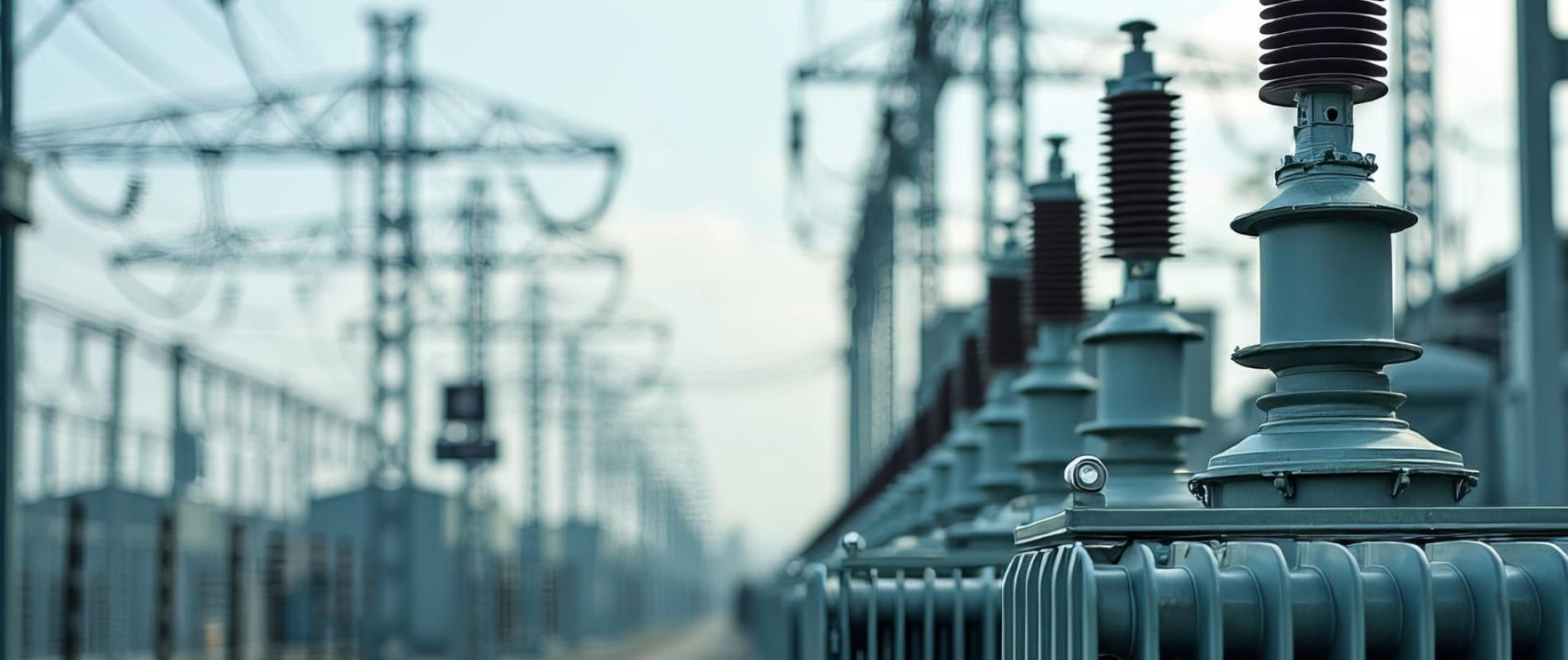
If you look at a big porcelain insulator from a distance, it looks like one single piece of brown or gray porcelain. But if you get close during a maintenance shutdown, you will see heavy cast-iron metal caps wrapped around the top and bottom ends.
Many workers wonder why we don't just make the whole thing out of porcelain, including the bolt holes.
Porcelain is hard to shape into screw threads
The main reason for those metal caps is easy to understand. Porcelain is amazing at blocking electricity, but it is extremely hard to machine. You cannot easily drill precise bolt holes into fired porcelain, and you definitely cannot cut smooth metal threads into it without cracking the whole piece.
Engineers use heavy cast-iron or aluminum caps to solve this. The metal caps have strong, thick bolt holes that allow workers to clamp the insulator tightly to the steel transformer tank at the bottom, and attach heavy copper cables at the top.
So how do you attach a smooth porcelain pole into a hollow metal cap so it never pulls out? You cannot use regular superglue. Manufacturers fill the tiny gap between the porcelain and the metal cap with a high-strength technical cement.
When this cement cures, it expands slightly and locks the metal cap onto the porcelain body with thousands of pounds of force. It creates a solid bond that can hold up heavy power lines hanging in mid-air for decades without slipping.
Because this joint connects three completely different materials—metal, porcelain, and cement—it experiences a lot of stress over time.
Metal expands quickly when the sun beats down on it during hot summer afternoons. Porcelain expands very little under heat. The cement sitting in the middle gets squeezed between these two materials every single day as the temperature rises and falls.
After fifteen or twenty years of constant heating and freezing, microscopic gaps start to open up in that cement line. Rainwater eventually finds its way into those tiny cracks.
Once water gets inside the metal cap, the cast iron starts to rust from the inside out. Rust is notorious because as iron turns to rust, it expands to several times its original volume.
That expanding rust acts like a slow-motion wedge inside the cap. It pushes outward against the metal and inward against the porcelain. Eventually, the pressure builds up so high that the porcelain ring inside the cap simply snaps.
That is why maintenance teams always check the paint on those metal caps during walk-arounds. If you see brown rust weeping out from under the cement line, it means water is already inside, and the joint is slowly being pushed apart from within.



WeChat Official Account
+86-757-81230551
+86-18925992735
