
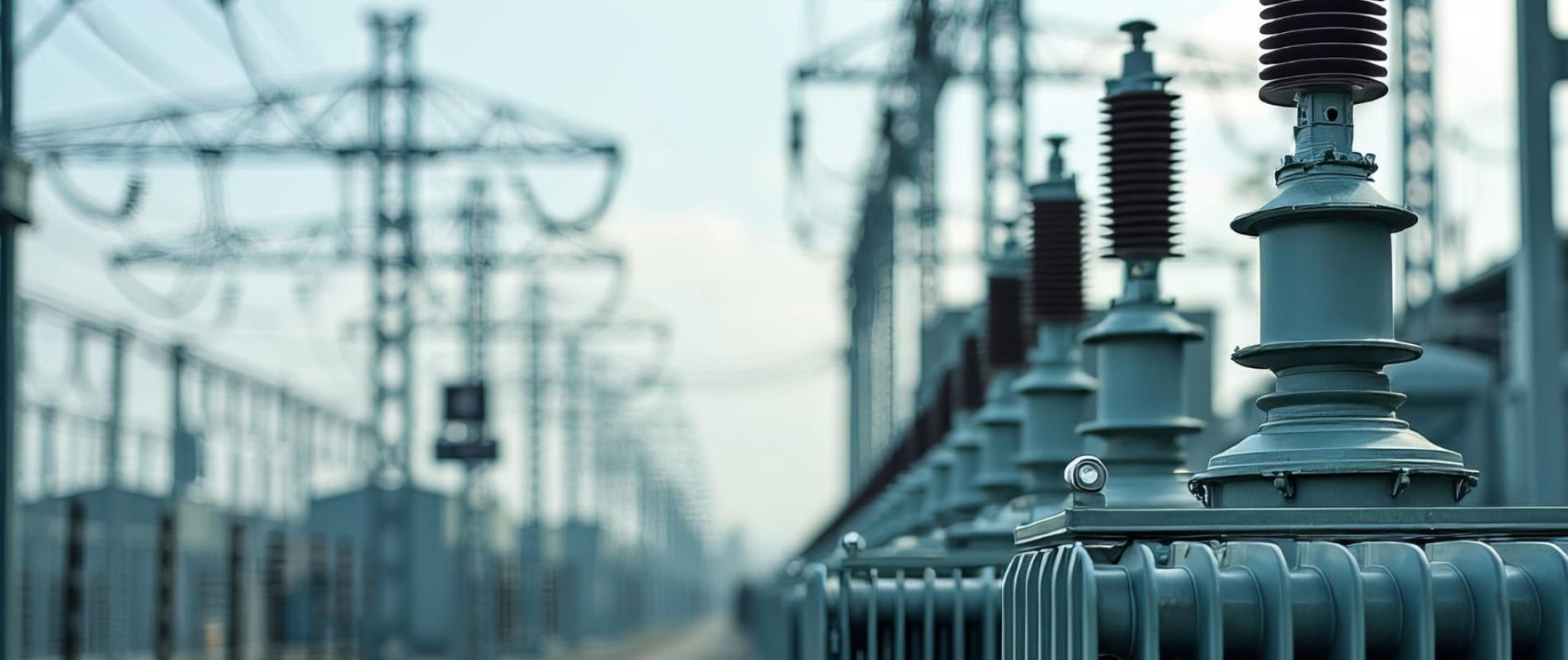
When you walk past a large transformer, you always see big, gray or brown ceramic pieces sticking out of the top. They have a funny shape that looks like a stack of upside-down plates. Most people look at them and have no idea what they actually do. New workers in the plant often ask if they are just fancy brackets to hold the wires in place.
Stopping the power from jumping out
The real answer is simple. High-voltage electricity travels from the street lines through thick copper wires and goes straight into the transformer. The main box of the transformer is made of heavy steel. This steel box sits on the ground, so it has no electrical power in it. If that live copper wire touches the steel box even for a millisecond, it will cause a giant short circuit with bright sparks and a loud boom.
That is where the ceramic insulator comes in. It sits around the copper wire like a thick pipe or shield. Because electricity cannot travel through ceramic, the power stays trapped inside the wire. The ceramic barrier stops the electricity from jumping sideways into the metal box, forcing it to go straight down into the internal coils where it belongs.
At the same time, those power lines coming from the street poles are incredibly heavy. Strong winds pull them back and forth, and heavy rain or winter ice adds extra weight. You cannot just let these wires hang loose or rest on the metal roof of the machine. The ceramic piece is bolted down tight to the steel tank. It acts like a tough little crane tower, holding the full weight of the incoming lines so they stay perfectly still.
If you look closely at the shape, you will notice it is never a smooth, flat cylinder. The manufacturer makes them with ridges or disk shapes for a very specific reason. When dirt or smoke builds up on the surface, electricity tries to "crawl" across that dirt to find a path to the ground. Those ridges make the path much longer and harder for the electricity to travel over.
Also, when a heavy rainstorm hits the yard, those ridges act like tiny umbrellas. Water drips off the outer edge of each disk, leaving the underside of the ceramic completely dry. This dry space breaks up the path of the falling water, so the electricity cannot use the rain to escape the wire.



WeChat Official Account
+86-757-81230551
+86-18925992735
