
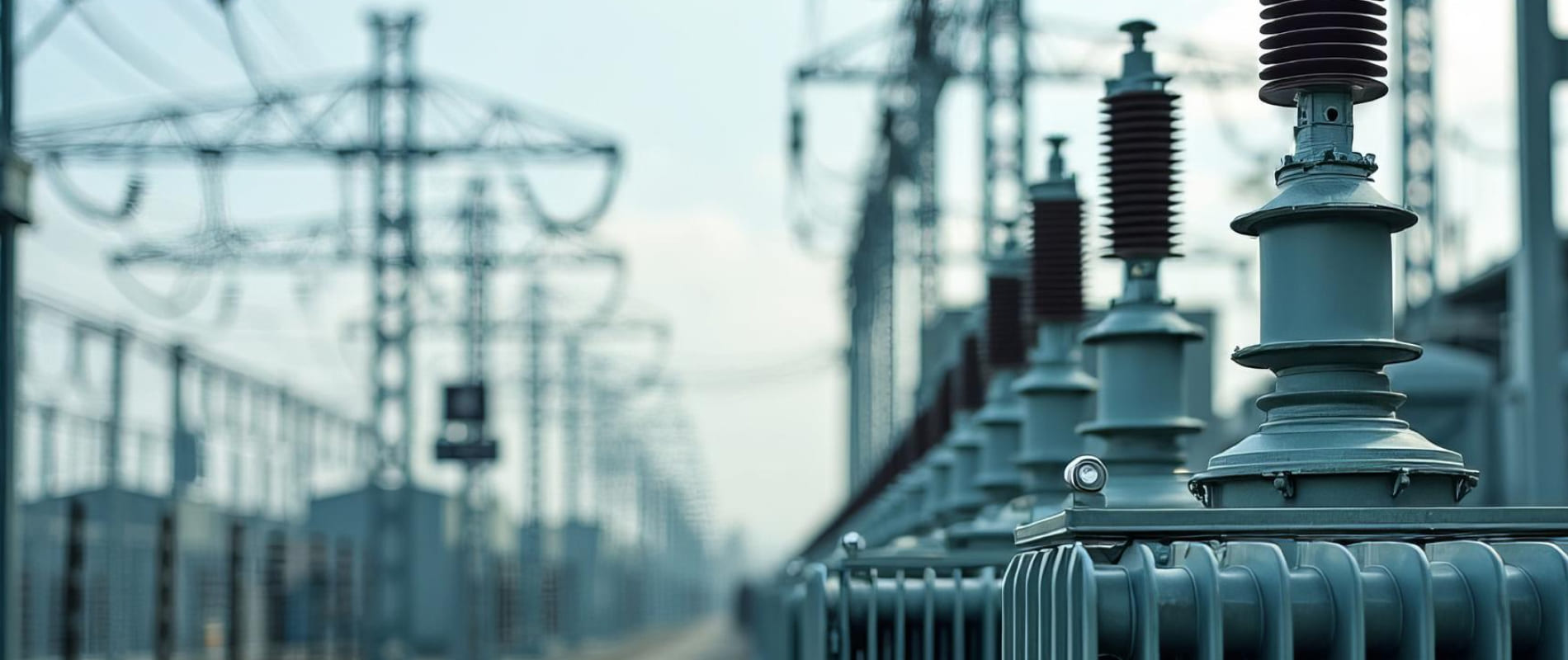
Porcelain insulators look big, solid, and incredibly tough. Because they hold up heavy electrical lines for decades, it is easy to think they can handle almost anything.
But porcelain has a hidden weakness. It is strong against pressure, but very brittle when twisted or pulled from the side. Using an insulator as a stepping stone or a handle during maintenance is a quick way to break it.
Porcelain is a lot like concrete. If you stack weights directly on top of it, it can support thousands of kilograms without a problem. This is called compressive strength.
But if you stand on the edge of one of the porcelain ridges (the sheds) or pull it from the side, you are applying a bending force. Porcelain has very low tensile strength.
A sudden sideways stomp from a worker's heavy boot can snap a ridge right off. It does not take as much force as you think to damage the ceramic edge.
During installation or transformer repairs, crews often need to tie down a tarp, lift a tool, or secure a ladder. It is tempting to loop a nylon rope around a nearby ceramic insulator to hold things in place.
When the wind blows or the rope pulls tight, it puts a concentrated load on the ceramic ridges. This uneven pressure can create microscopic cracks where the metal cap meets the ceramic body.
You won't see the crack immediately, but the mechanical strength is already gone. The damage will hide there until the unit is under full electrical load.
The weakest part of any insulator is the joint where the porcelain meets the top and bottom metal caps. Manufacturers use a special cement to glue these parts together.
If a worker grabs the insulator and pulls hard to swing themselves onto a platform, that sideways leverage puts massive stress on that cement joint. It can cause the internal cement to crumble or separate slightly.
Once that bond loosens, rainwater will seep inside the tiny gaps. The water will rust the internal pin and eventually crack the porcelain from the inside out.
Even if your boot doesn't snap the whole insulator, it can chip the smooth, shiny outer glaze. As we mentioned in previous articles, that shiny glaze keeps water and dirt from sticking.
A rough boot heel or a banging tool can leave a dull, rough scar. Dirt gathers in that rough spot quickly because the smooth surface is gone.
Over time, that tiny chip becomes the starting point for a major flashover. This happens because electricity loves dirty, damaged surfaces to travel across.
When you are working on top of a transformer or near a busbar structure, always keep your hands and feet off the porcelain. Never treat them like scaffolding.
Instead, use the designated lifting eyes, metal steel frames, or proper ladders to support your weight and your tools. This keeps both you and the equipment safe.
Treat every porcelain insulator like it is made of thick glass. It can hold up the power lines perfectly, but it was never designed to hold up you.



WeChat Official Account
+86-757-81230551
+86-18925992735
