
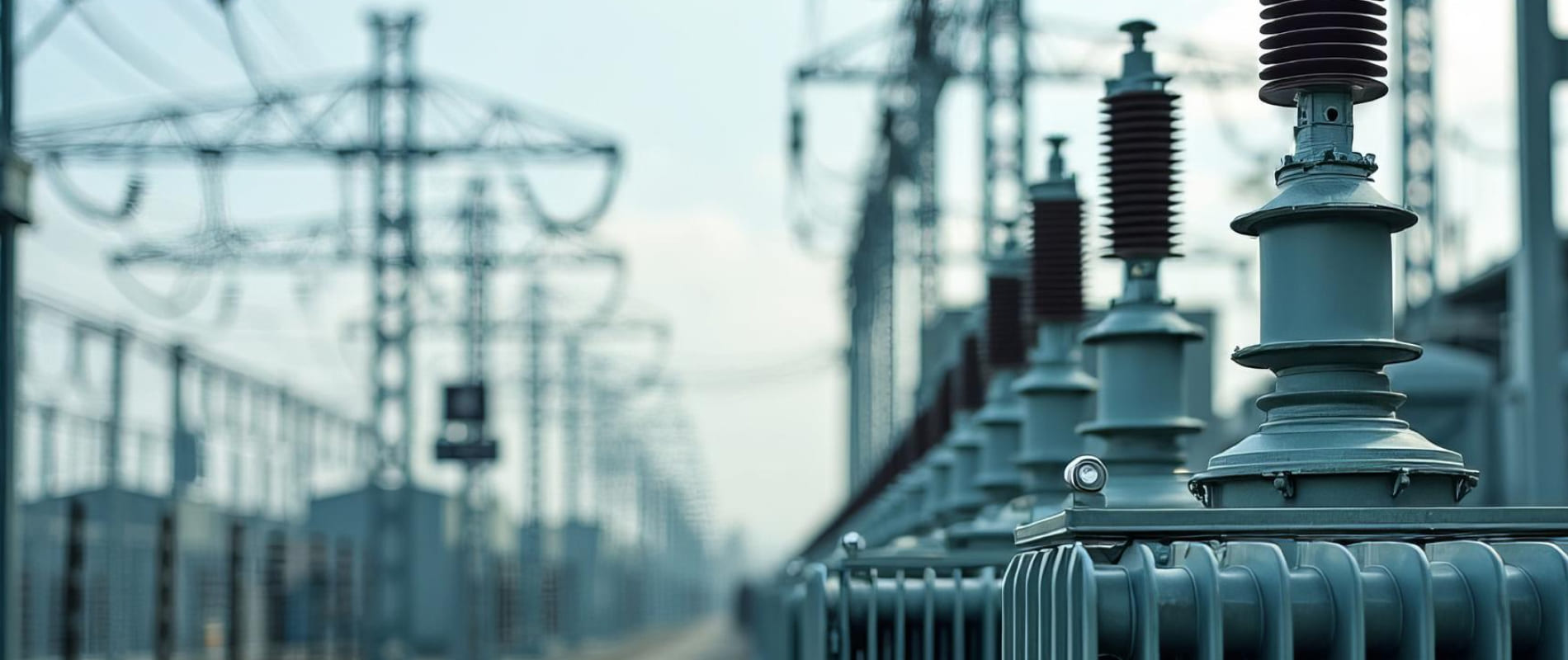
Bushings are essential parts of every transformer. Their job is simple but critical: they let a conductor pass safely through the transformer tank while keeping it insulated from the grounded enclosure. Without them, no transformer could operate reliably.
In this article, we’ll take a closer look at the main types of transformer bushings and explain where each type is typically used.
Porcelain Transformer Bushings
Porcelain bushings have been used for decades and are still common today. They are heavy and mechanically strong, which makes them very reliable outdoors. Their glazed surface helps them resist rain, sunlight, and pollution to a certain degree.
Typical use: high-voltage transformers in outdoor substations or transmission networks where durability matters more than weight.
Composite Transformer Bushings
Composite bushings use silicone rubber or polymer housing with fiberglass reinforcement. They are lighter than porcelain and have excellent resistance to surface tracking and pollution. Another advantage is easier handling and installation due to their reduced weight.
Typical use: coastal regions, industrial zones, or humid climates where porcelain bushings would require frequent cleaning.
Oil-Impregnated Paper (OIP) Bushings
OIP bushings use paper insulation saturated with insulating oil. This type delivers very high dielectric strength, which is why it is still widely used for high-voltage and extra-high-voltage applications. On the other hand, they require regular checks, since oil aging or moisture can reduce performance.
Typical use: transmission transformers operating at the highest voltage levels.
Resin-Impregnated Paper (RIP) Bushings
RIP bushings are a dry alternative to OIP. Instead of oil, the insulation is made from resin-impregnated paper that forms a solid core. This eliminates the risk of oil leakage, reduces fire hazards, and lowers maintenance needs.
Typical use: urban substations, renewable energy installations, or places where environmental and safety standards are strict.
Other Variants
There are also gas-insulated bushings and bushings designed for special equipment such as railway transformers. These are less common but highlight how designs can be adapted to meet specific technical requirements.
How to Choose the Right Bushing
The right choice depends on:
Voltage level – higher ratings often require OIP or RIP.
Environment – porcelain suits tough outdoor use, while composite resists heavy pollution.
Maintenance – RIP offers long life with little upkeep, OIP needs monitoring.
Standards – always confirm compliance with IEC, IEEE, or local specifications.



WeChat Official Account
+86-757-81230551
+86-18925992735
