
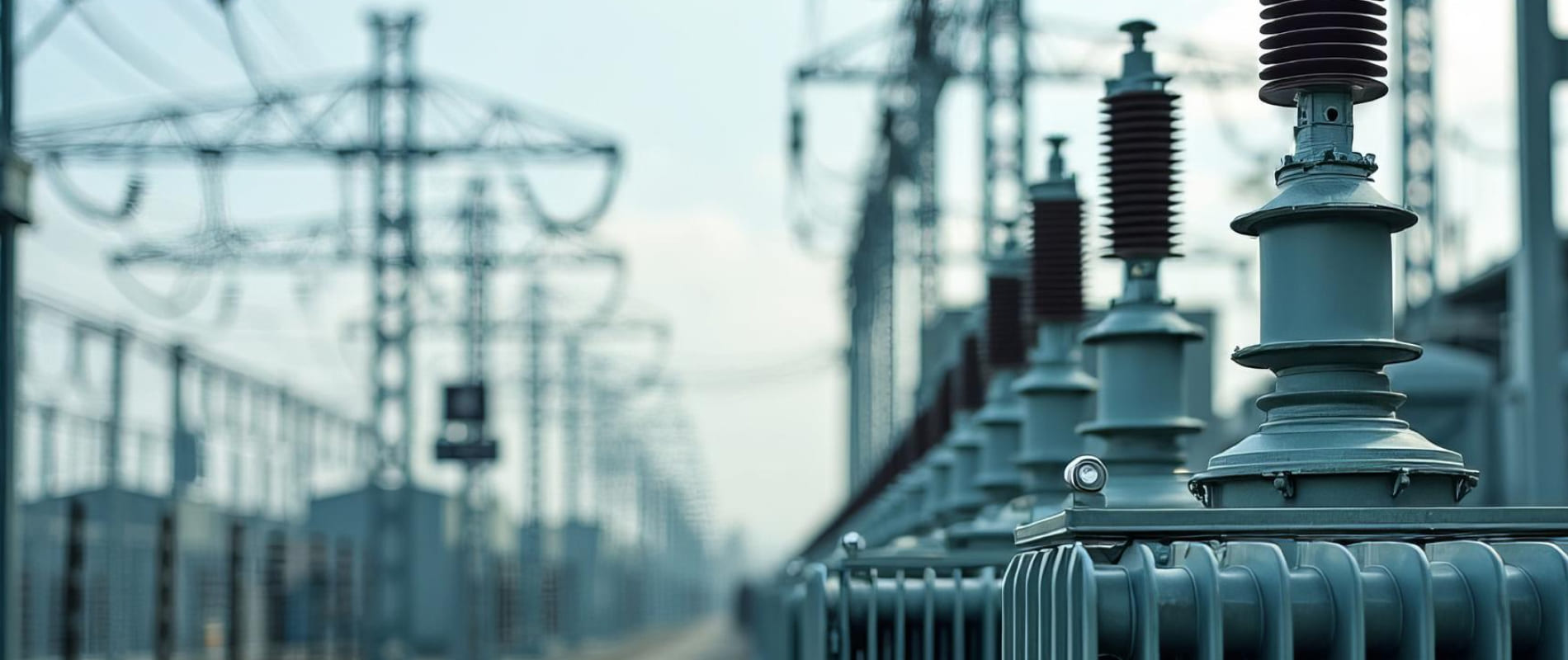
With data centers becoming commonplace, the strain on power distribution systems has never been higher. In this complex system, transformer bushings—often overlooked—are the essential components that keep high-voltage power safely flowing and reliably.
So, what are transformer bushings, exactly, and why are they so vital to the modern power grid? Let's take a look at how they work, their design, and what to consider when selecting the correct type.
What Is a Transformer Bushing?
A transformer bushing is, in essence, an insulation system that allows an electrical conductor to pass through a grounded transformer casing safely without inducing a fault. Transformers house their insides in metal tanks that are encapsulated, and therefore any connection to the outside world from the inside must be dealt with responsibly.
That is where bushings come into play. Acting like a protective tunnel, the bushing insulates the conductor—usually copper or aluminum—as it passes through the grounded housing. This protects high-voltage electricity from escaping and arcing, short circuits, or flashovers from happening.
Without transformer bushings, transformers would be vulnerable to electrical faults, which are responsible for causing dangerous failures or outages.
Bushings fulfill two primary functions: insulation and direction of electrical current.
1. Electrical Insulation
When electric current flows through a conductor, there is always a chance that it will discharge to the ground in a random fashion—a situation known as a ground fault. This situation can lead to arc flashes, fires, or destruction of equipment. Bushings surround the conductor with insulating sheaths to keep this indiscriminate discharge from occurring, enabling electricity to flow safely.
2. Current Guidance
Bushings also transmit current from internal windings of the transformer to external circuits. In a typical high-voltage bushing, there are alternating layers of conductive and insulating material stacked in a method referred to as capacitive grading. This design equalizes the electric field throughout the bushing so there are no hotspots or electrical stress concentrations that would be the point of failure.
Conceptualize a bushing as a precision-engineered bridge—it enables electricity to flow from inside the transformer out into the outside grid without ever touching the "danger zones."
3. Stress Control
Usage at high voltage puts bushings in severe electrical and thermal stress. Over time, this diminishes reliability as it degrades material. It is for this reason that modern bushings are made of heat-resistant materials that also minimize electrical loss. Some also have stress control layers or cooling devices to improve performance and longevity.
Transformer bushings are available in various forms depending on materials, mounting, and voltage rating.
By Material:
Solid Bushings – Typically of epoxy resin or porcelain, less but stronger and less suitable for extreme high voltages.
Condenser Bushings – Internal capacitive grading to support voltage stress more effectively. Best applied in high-voltage applications but more complex and costly.
By Application:
Dead-front Bushings – All-around enclosed to prevent contact by accident. Applied in home or city installations where security is a priority.
Live-front Bushings – Exposed connectors for easy maintenance access. They work well but require extra safety measures.
By Voltage Class:
High-Voltage Bushings – For voltages above 1kV. Well-designed to prevent breakdown even under extreme conditions.
Low-Voltage Bushings – Simpler and lower cost, these suit secondary distribution or lower voltage industrial systems.
Transformer bushings may be innocently appearing parts, but they are made up of several interdependent components:
Central Conductor: Typically copper or aluminum, this is the inside current path.
Insulating Layers: These provide electrical insulation and can feature capacitive grading to spread voltage stress.
Outer Housing: Often constructed from porcelain or polymer to shield the internal components from atmospheric degradation.
Mounting Hardware: Includes flanges and gaskets that mount the bushing safely onto the transformer.
Cooling Features: In high-voltage bushings, oil or gas insulation is used to manage heat accumulation and reduce energy losses.



WeChat Official Account
+86-757-81230551
+86-18925992735
